BLOG
What is Wellness?
What is “wellness”?
For a long time, our standards for what makes a “good” horse have been shaped by reels, videos, and demonstrations of exciting, seemingly outlandish results—bridleless flying changes, riding backwards while shooting bottle rockets, or whatever impressive feat a well-known trainer can pull off.
Why are they famous? Because they captivate the attention of people who don’t fully understand what they’re looking at—or what it takes behind the scenes to produce it. The level of pressure required for that kind of performance would break most horses and riders. And often, it does. Many horses and riders become the byproducts of an industry that prioritizes spectacle over mental and physical health.
It’s no wonder people feel pressured to perform when anything less than extraordinary is considered boring—or goes unnoticed.
The dictionary definition of wellness is:
The quality or state of being healthy in body and mind, particularly as the result of deliberate effort.
If we are training for wellness, then the effort we put in must actually produce health—in both body and mind. What we see outside of training becomes the real proof of its effectiveness.
It’s easy to get pulled into methods that market themselves with words like partnership, force-free, or ethical—but don’t consistently produce healthy horses.
Over time, good training should create strength and suppleness. A horse should be able to carry its weight evenly over all four feet and maintain that balance without constant human correction. Mentally, it should produce a horse that is resilient, adaptable, and at ease in its life—not just in work.
A well horse sleeps well, eats well, plays well, and generally integrates peacefully within a herd (assuming the environment itself is reasonable). Contentment is a reflection of health. A horse that is not well will struggle to be content.
So if a horse can perform impressive feats but cannot live comfortably in a herd, cannot rest properly, or cannot handle changes in routine without stress—are we really looking at a well horse?
Or just a performing one?
In my experience working with many high-performance horses and transitioning them into a program centered on soundness, I’ve watched profound changes take place. Horses whose personalities seemed limited or difficult often transform completely when their health is restored.
They were never “problem horses.”
They were simply unwell.
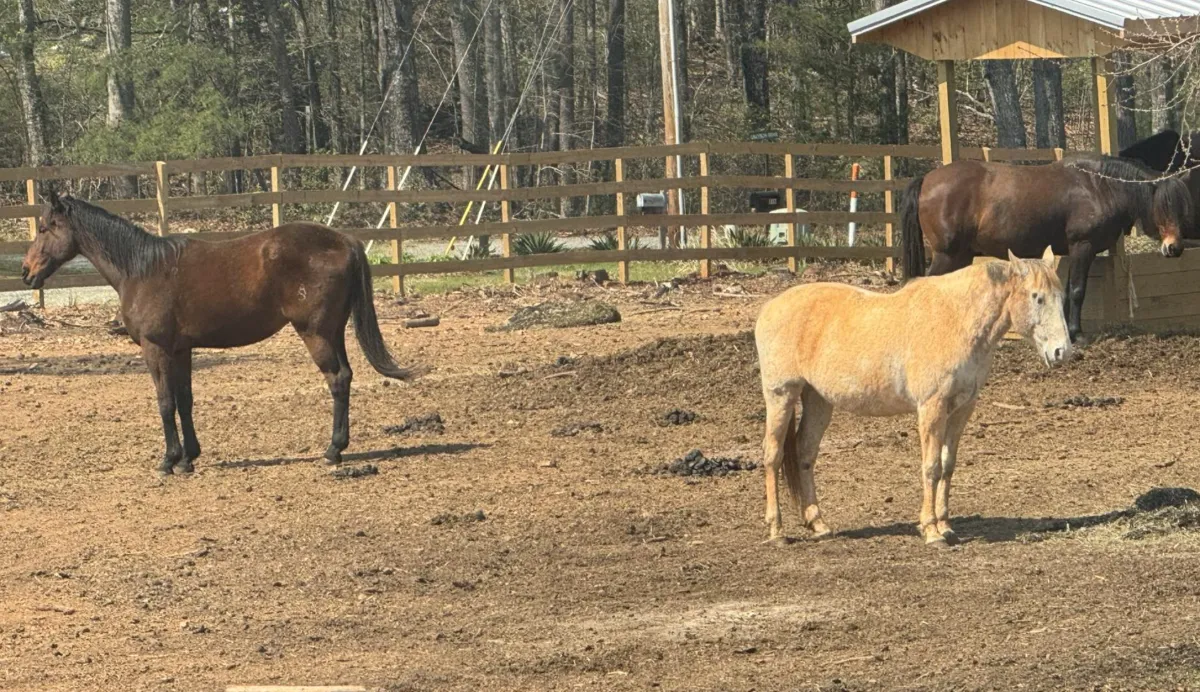
Watch your horses, and the horses of others - not to judge, but to understand. How do they eat? How do they play? How do they stand, and what are their resting expressions like? This will give you so much information beyond the feats they can perform, and should be our main focus: to train in a way that produces contentment beyond the arena.

GIVE YOU AND YOUR HORSE A PATH FOR DEVELOPING QUALITY HORSEMANSHIP.
© 2024 Amy Skinner Horsemanship. All Rights Reserved.