BLOG
Diagonal Balance
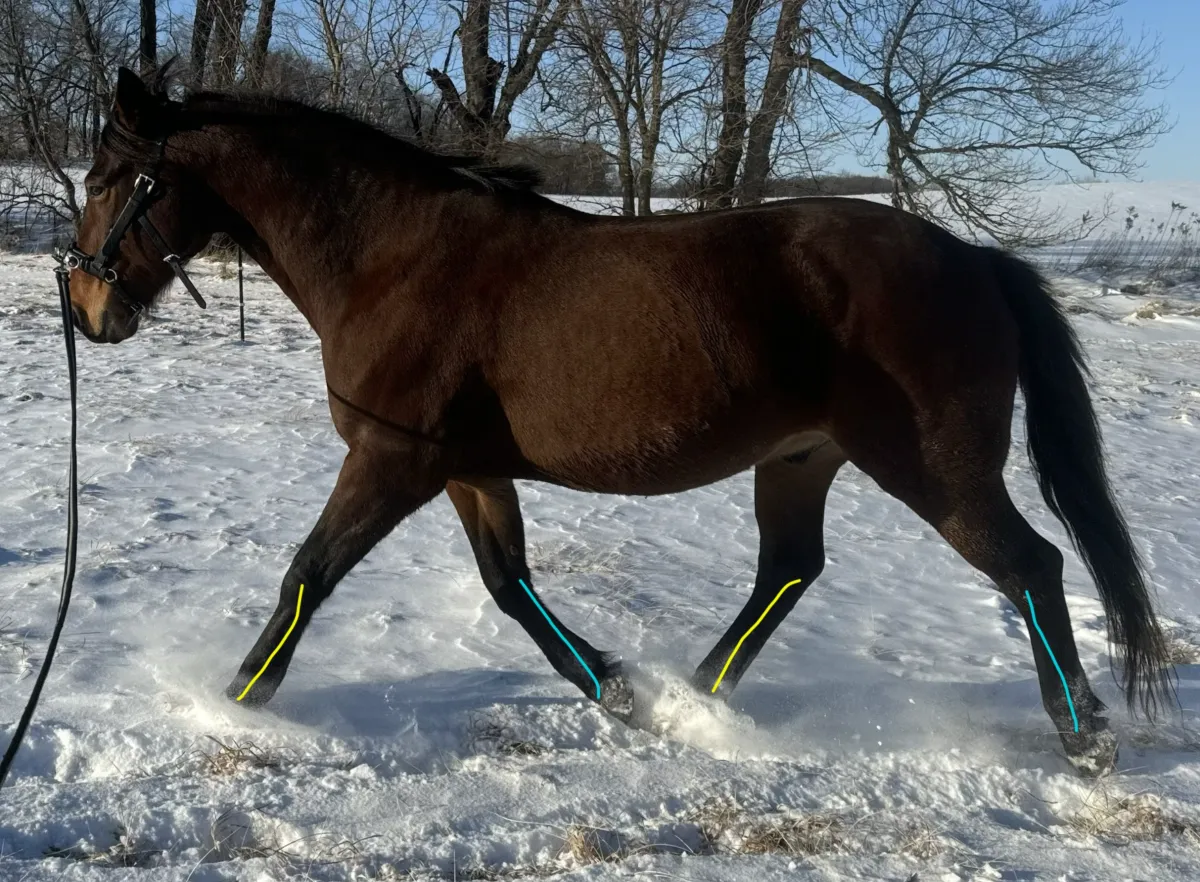
Diagonal balance is one of the first and most essential elements a horse must develop in order to move fluidly.
This doesn’t just mean that each leg in a diagonal pair is taking an equal step (for example, the inside fore matching the outside hind). It also means that both diagonal pairs — right fore/left hind and left fore/right hind — are functioning with equal strength, swing, and coordination.
Many horses who struggle with an ambling walk or a poor-quality canter lack true diagonal balance. Without it, correct hind leg flexion cannot develop. The horse cannot transfer weight behind because there is nowhere stable for that weight to go.
This is why rhythm is one of the first fundamental principles we teach. Rhythm allows the horse to find equal swing in all four legs. It unites the diagonal pairs and helps regulate the imbalance between the quicker foreleg tempo and the slower hind leg tempo. When rhythm is correct, all four legs begin to operate with the same tempo — in other words, the same stride length.

GIVE YOU AND YOUR HORSE A PATH FOR DEVELOPING QUALITY HORSEMANSHIP.
© 2024 Amy Skinner Horsemanship. All Rights Reserved.