BLOG
An Ode to the Amateur
Through my work as a teacher, I’ve come to know a wide variety of people. It can be difficult to understand someone without understanding the culture, the time, and the experiences that shaped them. There are so many unspoken expectations, norms, and assumptions guiding our interactions, and navigating them can be tricky.
Everyone’s position in life gives them a particular perspective—and their own set of hangups. As a trainer, it’s very easy to get pulled into the need to be right, to be seen as knowledgeable, to treat our education as gospel. It can feel too painful to admit we need to start over, to backtrack, and to do so publicly. It takes a great deal of strength to remain humble and open without letting that quiet, sneaky ego slip in.
Teaching other trainers adds another layer of complexity. Comparisons and competitions creep in—age, years in the industry, reputation versus actual ability, and countless other factors. Information struggles to travel in a straight line from teacher to student, and what arrives can land crooked or resisted.
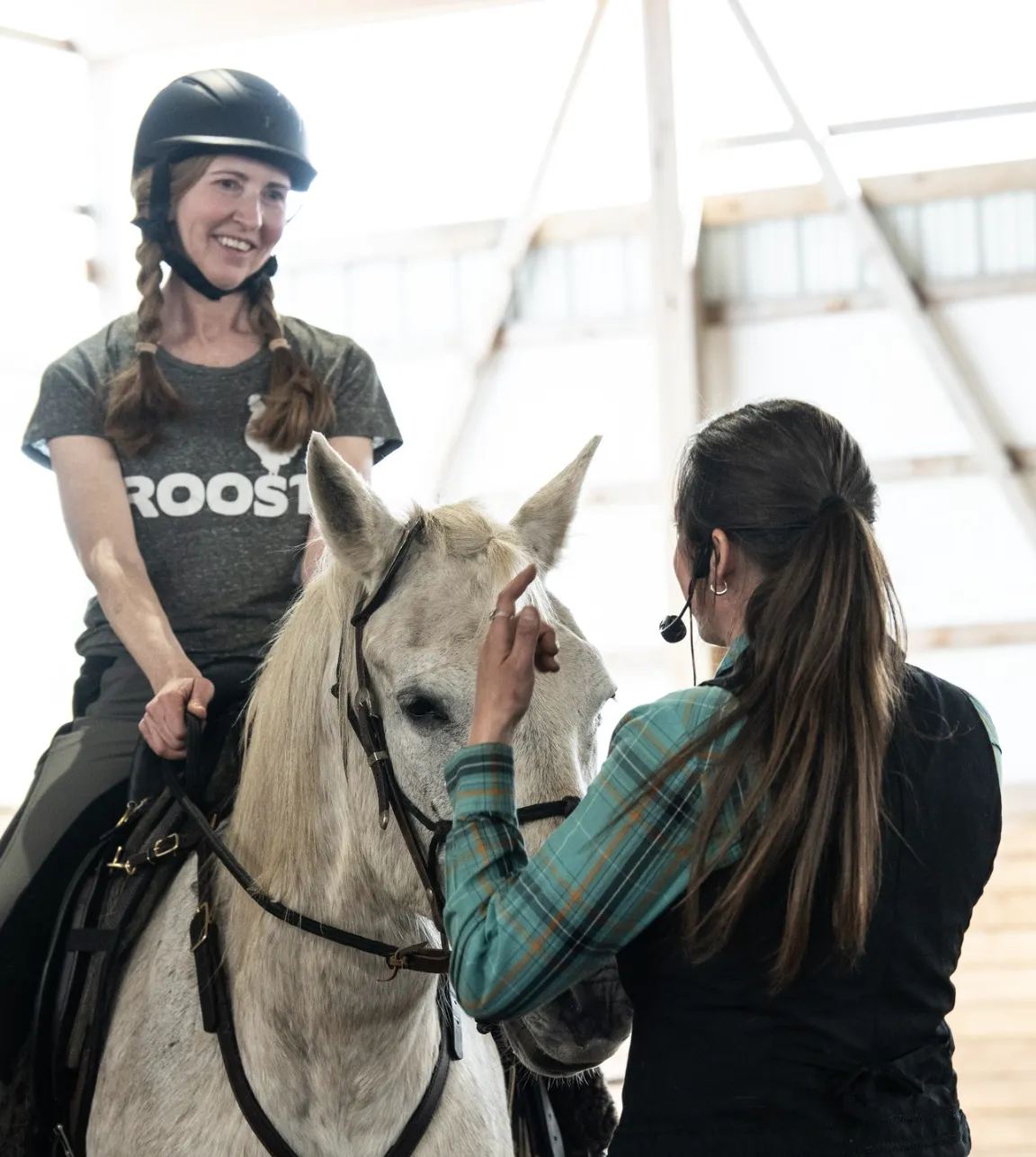
The amateur, however, often does not struggle in the same way. The amateur is usually aware—sometimes painfully so—of their need for help and guidance. They are often willing to work ten times harder at the basics. They practice scales. They return again and again to foundational lessons, accepting the repetition required for things to truly settle, without the heavy emotional burden of feeling untalented or deficient if progress takes time.
I have many dedicated amateur students who, before they even realize it, develop remarkably sophisticated seats—far beyond their own expectations—and produce high-quality work with their horses. Often they arrive there quietly, without noticing, because ego was never steering. It was simply one step in front of the other.
For me, reinventing my basics and rebuilding my seat was excruciating. I felt like a failure—a trainer with a poor foundation. I struggled to dismantle work I had already done and taken pride in with my horses. It took an immense amount of dedication to push past what felt like public humiliation: untangling knots I had created and patiently redoing them, one by one, in a better order.
Over time, I’ve grown more accustomed to this feeling, even learned to welcome it. Still, I often think of the quote about a camel passing through the eye of a needle. I’m not rich by any means, but a developed reputation can make humility just as difficult to pass through. For myself, and for many others in similar positions, identity can become a barrier. The amateur, unburdened by that weight, is often freer—more teachable, more available to learning.
In truth, the amateur is not defined by a lack of knowledge, but by a lack of armor. It is the absence of reputation that makes room for curiosity, and the absence of certainty that keeps the door open. We all carry both identities within us, shifting between them as life asks us to grow.
The amateur reminds us that learning is not a performance, and that mastery is not built on certainty, but the opposite - it is build on the courage to return again and again, to what we do not yet know.

GIVE YOU AND YOUR HORSE A PATH FOR DEVELOPING QUALITY HORSEMANSHIP.
© 2024 Amy Skinner Horsemanship. All Rights Reserved.