BLOG
Gear Fit and Quality
Years ago, I was riding with a clinician who, when asked to work with someone's horse, would take off their halter or saddle or bridle and replace it with his own equipment to work them. At the time, I thought this was overkill and maybe a little snooty - I didn't really understand the need for this.
But after years of handling fractious horses, I have learned that generally speaking, the most dangerous or out of control horse shows up in the worst equipment: loose or flimsy halters with 6 foot long stretchy lead ropes that give you absolutely disastrous communication abilities. Neoprene or plastic reins that will break or don't release across the horse's nose - saddles that slide around or are far behind the horse's balance point so you have no stability in the saddle. When working with a horse who is upside down, afraid, or very confused about what to do, these kinds of gear issues can not only be a distraction, they can be deadly for both rider and horse.
I don't make all my students subscribe to my particular flavor of gear preferences. I don't care what kind of saddle you ride in or bridle you use so long as it fits well, and is quality material - that, over the years, has become an absolute must for me.
The halter needs to fit securely - not too tight but it can't be sliding and swinging around. The lead rope needs to connect to the halter well and be secure too - made from a solid material and that is long enough to work with. I don't tend to use lead ropes shorter than 12 feet - and a big issue here for many is rope management. Many folks use far too short lead lines to avoid feeling overwhelmed by the length of line but taking the time to learn this will pay dividends, especially if you plan to be on the other end of the lead rope of a nervous or confused horse.
Personally, I prefer treeline lead ropes 12' long, which are sturdy, give a very clear feel and handle beautifully. I stay away from anything stretchy, flimsy, or extra heavy. They have to have a nice balance to deliver the feel of the lead line well. (This is not an advertisement for any one brand here)
As for bridle reins, I'm a fan of leather or animal hair - horse hair, mohair and such. They have an incomparable feel since they are "live" materials. Treeline material reins work great too.
Saddles are a very complicated topic for another day - but the balance has to put the rider over the center of gravity of the horse and put the rider in a stable position. I see so many saddles that swing the rider side to side, destabilize their legs, and are downright dangerous with slipping and sliding of the rider.
Riding and working with horses is a sport, and a dangerous one - I wouldn't go rock climbing without good ropes and good gear, and I would have someone help me learn this gear well. We tend to minimize this with horses, and handle 1200 pound prey animals without attention to their or our athletic development, and with incorrectly fitting and poorly made gear regularly - which puts us, and them, at a disadvantage to be safe, to learn, and to enjoy each other.
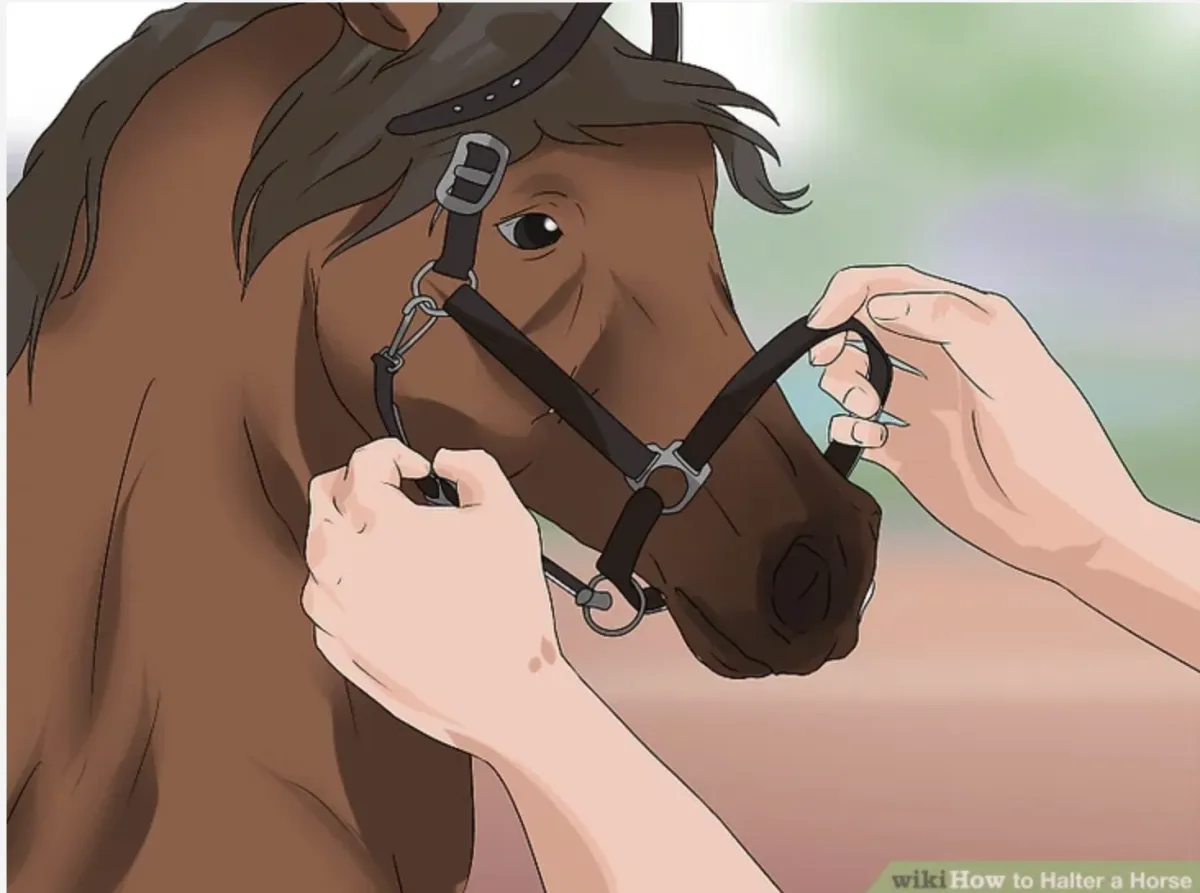
This photo is a weird one I found from wikihow

GIVE YOU AND YOUR HORSE A PATH FOR DEVELOPING QUALITY HORSEMANSHIP.
© 2024 Amy Skinner Horsemanship. All Rights Reserved.