BLOG
Looking Good or Doing Good?
There is so much to know it can be overwhelming. Every year that I teach, I learn so much more about the horse and their needs - physical and emotional, that it adds another question to my mind about how to help people. It used to be so much simpler for me: training was a series of reinforcing, or not reinforcing, behaviors and movements.
Then I started learning about feet, teeth, saddle fit and more. Like many, I started to become aware of how difficult it can be for a horse to learn when they are not balanced or feeling pain - and worse, I started to learn how much a horse could be a prisoner in their own dysfunctional body: while we were looking for lead changes and lateral work, they were just trying to survive.
This is where teaching can become tricky, and where teachers can become very judgemental about what others are not doing for their horse - and wehre students can feel shame, guilt, paralysis, or lose interest entirely.
When I show up to help a horse and a new student, I see a lot that I would not have seen ten years ago. But I have to remember my responsiblity is to help, not just to unload ten years of study onto a person in one hour. My goal is not to overwhelm them, make them fearful of ruining their horse with mistakes, make them feel ashamed, guilty, or discouraged: my goal and my responsibility is to give them, if it's appropriate, hope : in the form of something actionable they can do now.
I try to find the piece that will be easiest to grasp for the student and will do the most good the fastest. Even if there are a million pieces that need to be addressed, if the student can find some hope in their horse's better behavior, calmer way of being, improved comfort, or whatever the problem is, they can get invested and go deeper. If it feels like I'm having them chase around a million ways to spend their hard earned money for no result, they can get very discouraged. And, many people have already spent thousands on vetting and trainers and bodyworkers and so on before I even show up - they need hope -
It doesn't help anyone for me to guilt them, shame them, or try to look superior or more knowledgeable than everyone else. What helps is a little bit they can do right now, and go from there.
And I have learned this after overwhelming a lot of people. If I turn them away in frustration, the horse loses.
Of course, it's up to the student and the individual to be open - to do their part to manage their own emotions. This thing is very emotions - laden, and it can be tricky even with the best presentation to manage that. I can be polite and frank and as tactful as possible but it's still each of our own responisiblities to deal with our feelings - but, it's my job to present this in the best possible way that I can to help each person I work with.
It's not helpful or meaningful for the teacher or practitioner to look good - it's much more meaningful to DO good. And how that looks to each of us is our own personal walk to discover.
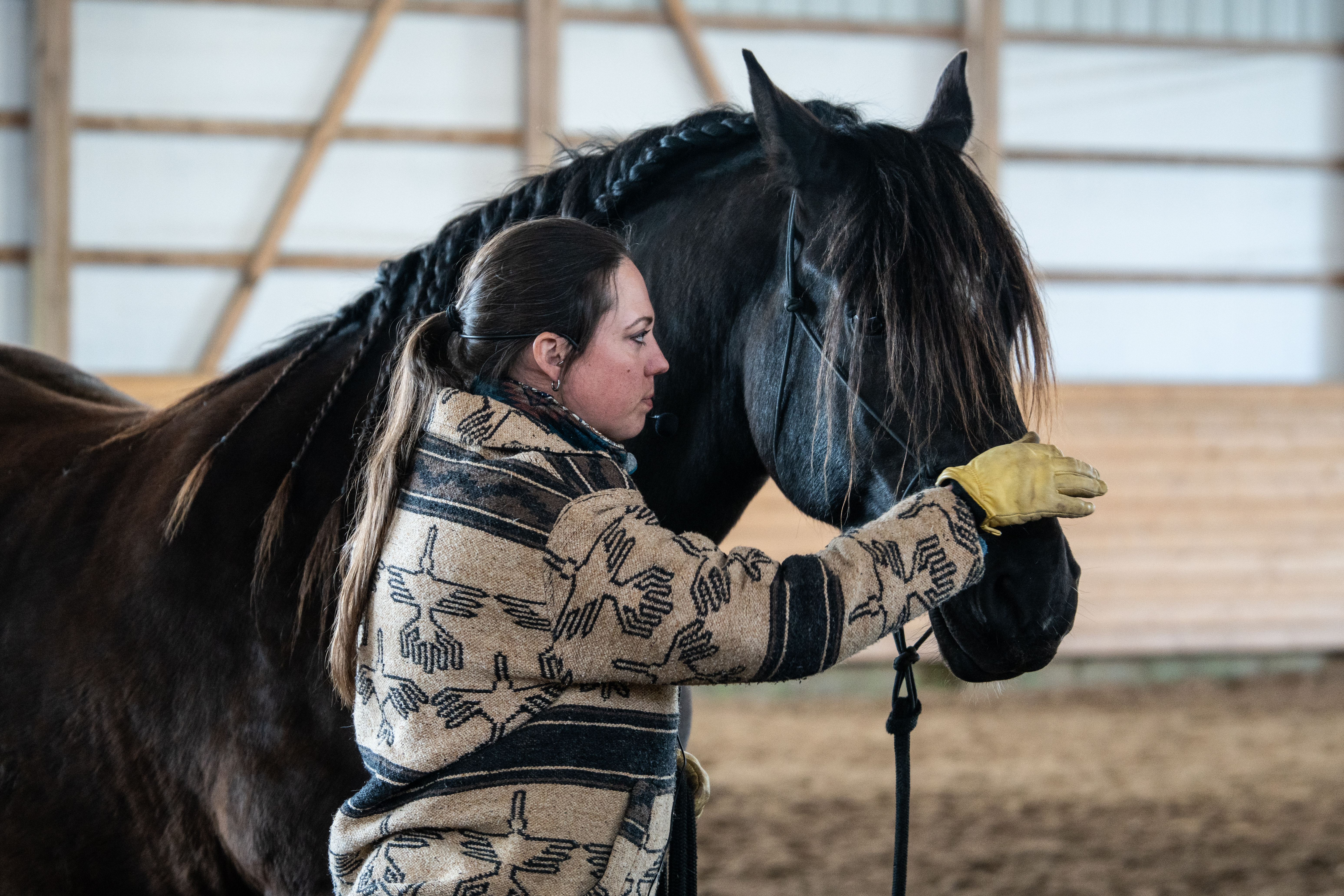
Photo by Jesse Cardew

GIVE YOU AND YOUR HORSE A PATH FOR DEVELOPING QUALITY HORSEMANSHIP.
© 2024 Amy Skinner Horsemanship. All Rights Reserved.