
BLOG
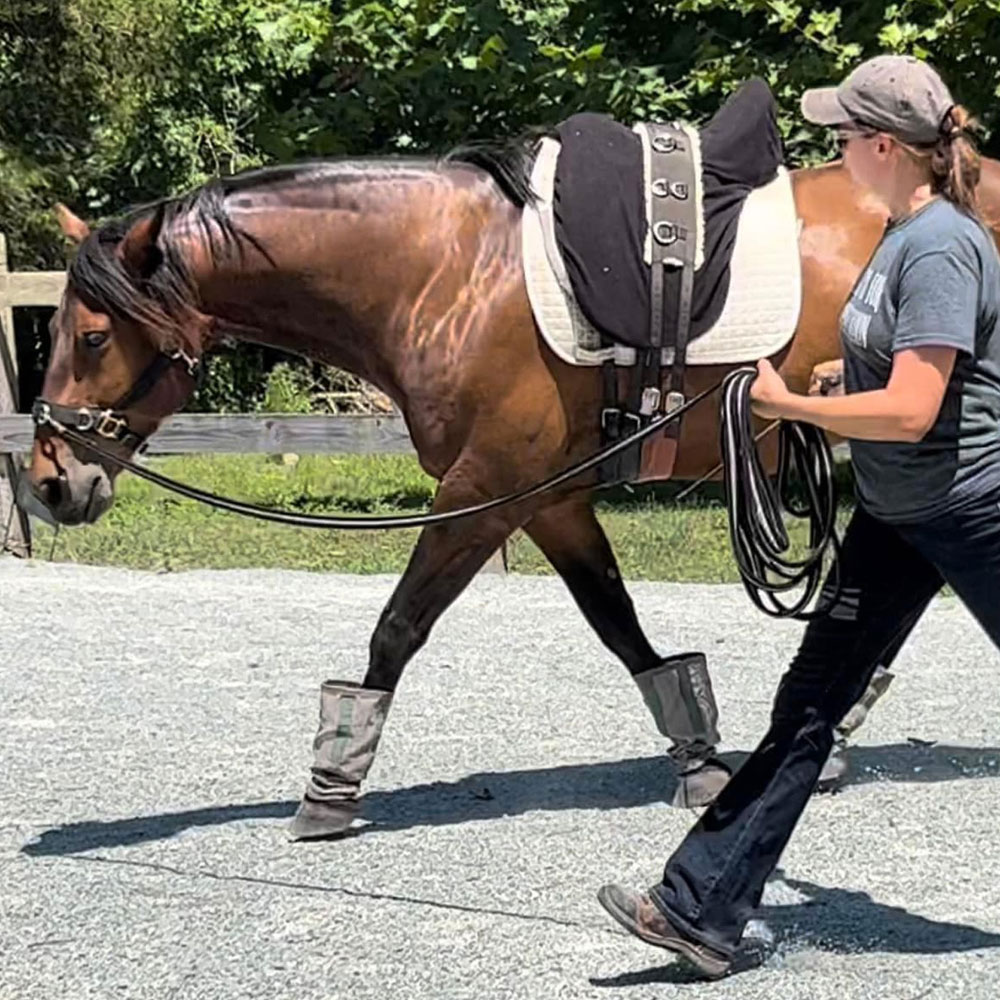
The Illusion of the Missing Piece
There’s a resistance that shows up when you try to teach people something simple. It sounds too simple to be true, and often people believe that can't possibly be the whole picture.
Because simple requires staying, and staying is something we are no longer societally conditioned to do. But progress and results, unfortunately, require just that - a simplicity in putting one foot in front of the other, staying until you understand it, and staying until it works.
Instead, there’s this constant reaching for something else. A better tool. A different method. A new system. Something just out of reach that promises to make the whole process smoother, faster, easier. More effective. More interesting.
It’s rarely said outright, but the question sits just under the surface:
“Is there something I’m missing?”
And in today’s world, the answer is always—conveniently—yes.
There is always something to buy. Something to add. Something to optimize. A device to improve your meditation. A supplement to fix your focus. A program that promises results in half the time. The message is constant and subtle: if it’s not working, it’s because you don’t have the right thing yet.
With every post I make or clinic I teach, there is always the question about what gear to buy. It is extremely easy to get people to buy products, gear, or subscriptions, but very difficult to get people to stay in skill building long enough for it to work.
So people keep looking, and that’s where teaching gets difficult.
Because real progress usually lives in the exact place people are trying to leave.
It lives in the repetition they’re bored of.
In the basics they think they’ve already done.
In the quiet, unremarkable work that doesn’t feel like progress—until it is.
But that kind of work doesn’t sell.
There’s nothing flashy about riding the same circle until it’s actually balanced. Nothing exciting about refining timing, feel, awareness—things that can’t be packaged or shipped or upgraded overnight.
So instead of settling in and working through it, people start to drift. They change approaches too soon.
They interrupt the process before it has time to produce anything.
They trade depth for novelty.
And the hardest part, from a teaching perspective, is that it doesn’t look like resistance.
It looks like curiosity.
Like dedication.
Like someone who’s “trying everything.”
But underneath it, there’s a lack of trust—both in the process and in the idea that the answer might not be new.
It might be right here. It might be doing the same thing again, but better.
Doing it slower, with more awareness.
That’s a hard sell in a world that rewards acceleration and constant input.
There’s also a kind of discomfort people are trying to avoid.
Because when you strip everything else away—no new tools, no new systems, no distractions—you’re left with your own ability. Your own timing, your own abilities, your own feel, and all the emotions that stir under the surface. All the places where those things fall short.
It’s much easier to believe the problem is external, that something is missing, rather than sit in the reality that nothing is missing—except refinement.
So people keep searching, and in doing that, they unintentionally stay stuck.
Not because they aren’t trying, but because they’re never staying in one place long enough for anything to actually change.
Good teaching, then, becomes less about adding information and more about holding the line.
About bringing people back—again and again—to what matters.
To what works -
To what is already in front of them.
And asking them to stay there just a little longer than they want to.
Long enough to get past the boredom.
Past the doubt.
Past the feeling that this simplicity repeated until perfection can’t possibly be enough.
More often than not, the simplest is the most effective - though that does not make it easy, and therein lies the challenge: to hold the line long enough to develop real feel, real skill, and to make it all look effortless, knowing that beneath that lie hours of dedicated effort to the same basics.

GIVE YOU AND YOUR HORSE A PATH FOR DEVELOPING QUALITY HORSEMANSHIP.
© 2024 Amy Skinner Horsemanship. All Rights Reserved.