BLOG
The Difference Between Quiet and Absent
As we are bombarded with images of horses that are over-managed, over-compressed, over-aided, and overused, it is easy to swing to the opposite extreme. In the quest to be soft and kind, contact and the thoughtful use of the aids can begin to feel difficult to navigate. What is too much? When do our aids become overbearing?
Good intentions can easily lead us into another problem entirely: the absence of aids, the absence of direction, the absence of support.
As with so many things in horsemanship—and in life—the truth lies somewhere in the middle. Between excessive compression and a floppy, sagging nothing. Between reins that are rigidly restrictive and reins that bounce and disrupt with every stride. Between a leg that constantly grips and grinds, and one that flaps aimlessly against the horse’s sides, creating movement without meaning.
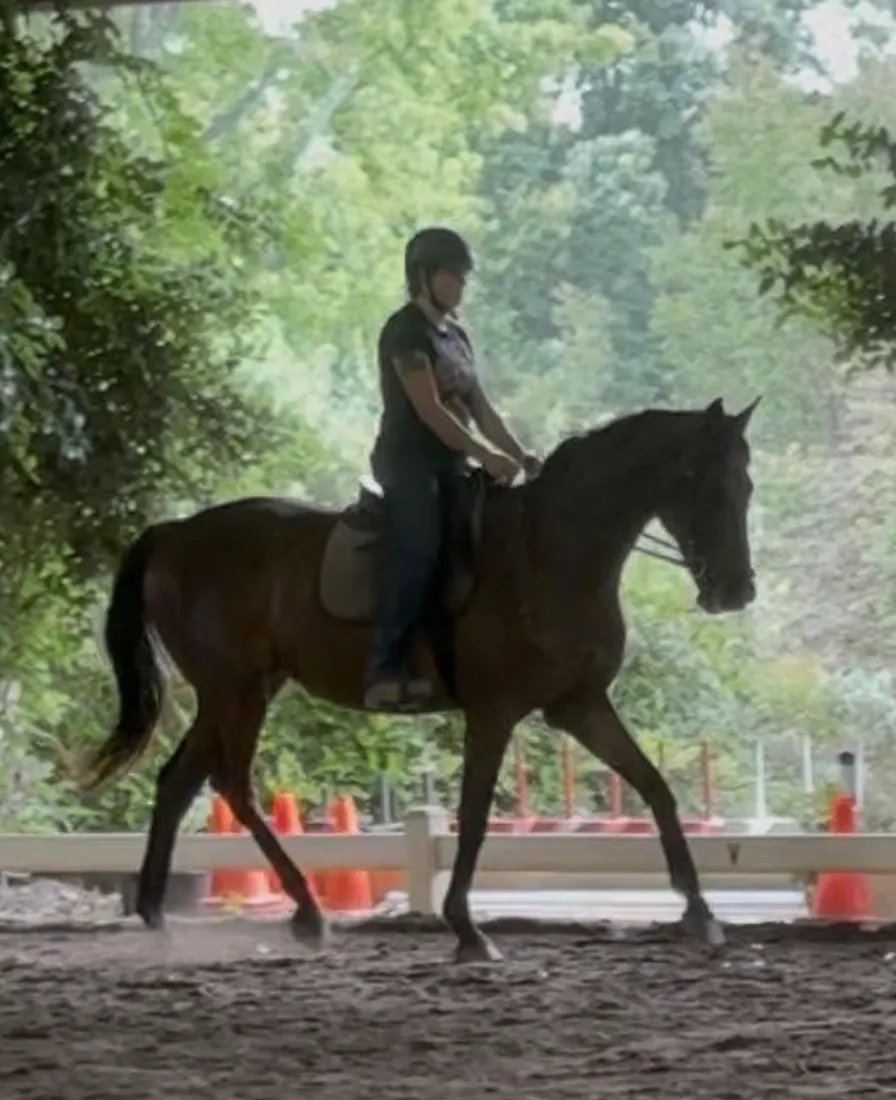
A horse wants to feel secure, and security is, in large part, sensory. Our bodies should first and foremost avoid disrupting the horse’s movement. This goes deeper than simply sitting in the middle, although a balanced seat is the foundation of everything. Moving with the horse begins at the seat, but it extends into the legs and hands as well.
When our aids are so loose that they are disconnected from the horse’s movement, they become unpredictable. Then, when we finally pick them up, they arrive out of nowhere—interrupting rather than complementing the rhythm of the gait. Even a long rein can pull if the rider is not moving in harmony with the horse. A rein is only as soft as the hands and body that carry it.
Security also comes from structure. Our reins and legs should create a supportive framework that allows the horse’s back to lift, open, and swing. When the horse feels supported rather than trapped, carrying the rider becomes easier and more comfortable. They don’t simply tolerate us on their backs—they can begin to enjoy moving with us.
The leg should never interrupt the movement of the rib cage through constant squeezing or grinding, but a completely loose, swinging leg can be just as disruptive. I often think of the aids like a well-fitted bra: if it’s too tight, it restricts movement and becomes uncomfortable. If it’s too loose, it shifts constantly and offers no support at all. The goal is not pressure or absence, but consistent, comfortable support.
We surround the horse with the aids—not to confine them, but to accompany them. We move with them rather than against them, offering balance and stability while continually recentering ourselves.
That is when the line between horse and rider begins to blur. We are no longer simply a person sitting on top of a horse, but two beings moving together with a shared rhythm.
Reaching that place requires education, certainly. But it also requires feel—the willingness to listen to the horse, to step beyond the comfort of rigid beliefs, and to continually refine ourselves. The horse does not need us to disappear, nor do they need us to dominate. They need us to be present, willing, and open to help them.

GIVE YOU AND YOUR HORSE A PATH FOR DEVELOPING QUALITY HORSEMANSHIP.
© 2024 Amy Skinner Horsemanship. All Rights Reserved.