BLOG
Stride Length vs Speed
Stride length vs. speed - and improvement by degrees
One of the concepts that can be very confusing in the begging for many is the difference between getting better stride length, instead of just quicker steps.
When developing the correct tempo for each horse (if you're interested I wrote on this topic a while back, scroll down a bit to find it), we are looking for more equal distribution of weight on all four legs. Many horses initially will take short and quick steps in the front legs, with their front legs barely reaching in front of their chest. If they don't have good shoulder mobility or good hip stability, they will simply make faster quicker steps when urged forward. Over time with good work, the shoulders open up and the "quickness" is replaced by length, if desired, or the rider can ask the shoulders more "up" if desired - in other words the stride phase of the front leg becomes more controlled: the front leg can be more delayed on its way down, taking a greater range up, or a greater range forward.
The feel in the horse is night and day between fast and long steps - fast steps can feel hurried, concussive, and jittery. A drive aid creates more tension, a half halt often does not go through.
A long stride creates a swing - the drive aid creates more oppenness, the half halt goes right through and creates greater flexion in the hind leg joints.
But to a student who is used to choppy and tense, it can be quite an adjustment for them when the horse opens up!
Some horses use tension to continually pull themselves forward, and once they are "over the back," can feel more easily tired at first.
One of my students in a lesson recently was struggling with keeping her horse forward. She mentioned he felt so sluggish, and yet the stride length that I observed was longer and more ground covering than I'd seen him take yet. He had come so far - from a very inverted and tense arabian, to very newly opening his topline and lengthening his stride. He stretched his neck forward now, and covered far more ground in his stride.
Why did she feel like he was going so slowly? Partially because she was used to his normal walk being tense, quick, and very "electric." Sometimes we get used to an anxious and tense energy, and can actually feel we are losing impulsion when the horse loses this tension.
The other reason is that he was no longer pulling himself along by the front legs. He was using all four legs more equally, and because of this, using weaker muscles and becoming more easily tired. When you get out of compensation postures, you will find weakness in areas that have been sleeping, now just woken up and trying to find their own sea legs.
I think it's very important for people to see and understand that progression is not always tension to lightness - inverted to round, ugly to beautiful. It is in steps, and layers, and progress comes by degrees. And if we haven't felt this progression before, we need someone skilled in this art to guide us. If we doubt ourselves so badly we back off whenever anything feels bad or different, we will not find forward -
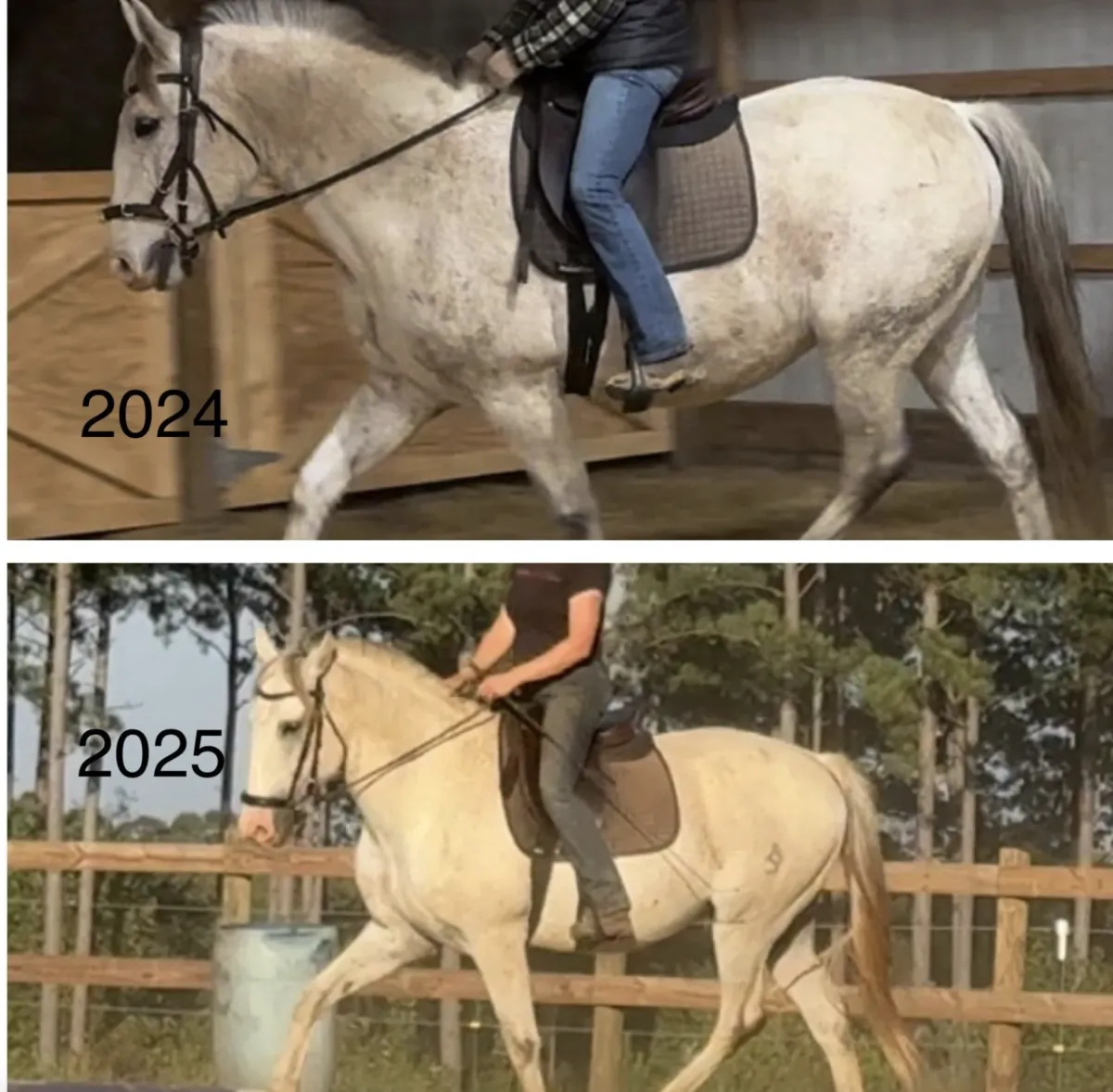
Mobility is gained by degrees - anyone who is working on their own mobility will understand this. You might not notice your own progress until looking back 6 months prior at videos and photos and comparing them to today's work.

GIVE YOU AND YOUR HORSE A PATH FOR DEVELOPING QUALITY HORSEMANSHIP.
© 2024 Amy Skinner Horsemanship. All Rights Reserved.