BLOG
The Tail Tells the Tale
It’s easy to study movement by looking at individual parts, but it’s essential to study the movement within the horse—even in a still photograph. You have to imagine, with your mind’s eye, the moments before and after the image. What is rigid? What is moving? Where is energy being blocked, and where is it flowing freely through the body?
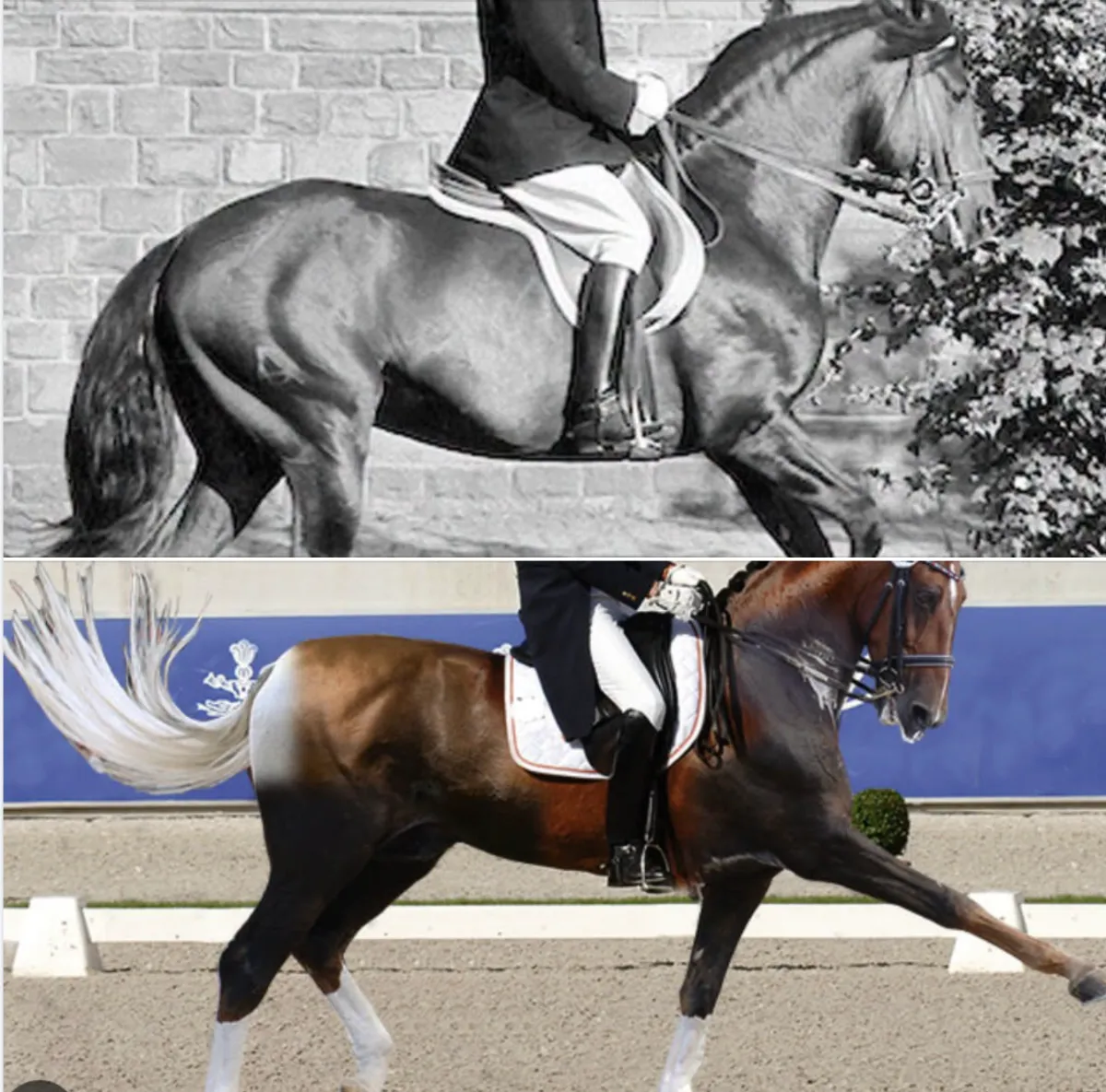
When watching horses under saddle, the tail offers an incredible amount of information because it reflects what is happening through the back. A softly lifted tail that swings in time with the rhythm of the gait often reveals a swinging back, deep breathing, and a horse that is comfortable in its work. A tail that is kinked, rigid, clamped, or constantly flicking can indicate tension through the back, irritation, discomfort, or simply a lack of true throughness.
A tail carried consistently off-center can also tell us something about the hindquarters. It may suggest that the pelvis isn’t working symmetrically or that one hind leg isn’t bending and carrying as well as the other, causing the tail to drift to one side.
The ideal tail reminds me of a mermaid’s hair underwater—weightless, fluid, and simply following the movement of the horse. Years ago, I heard a cowboy say, “The tail should weigh no more than the hair on it,” and that image has stayed with me ever since. The tail should appear soft, swinging, and free, reflecting a body that is breathing deeply and moving without unnecessary tension.
When I ride, that’s what I’m striving for: deep breathing, an open and swinging back, calm forward energy within a steady rhythm—and a tail that quietly tells me everything I need to know.
You can manipulate a headset. You can manufacture a frame.
You can’t fake the tail. Watch it and learn from it.

GIVE YOU AND YOUR HORSE A PATH FOR DEVELOPING QUALITY HORSEMANSHIP.
© 2024 Amy Skinner Horsemanship. All Rights Reserved.