BLOG
Right Exercise, Wrong Time
One of the things years of teaching have shown me is that timing matters just as much as the exercise itself.
An exercise can be completely correct, incredibly valuable, and still be the wrong thing for a student at that particular stage of learning.
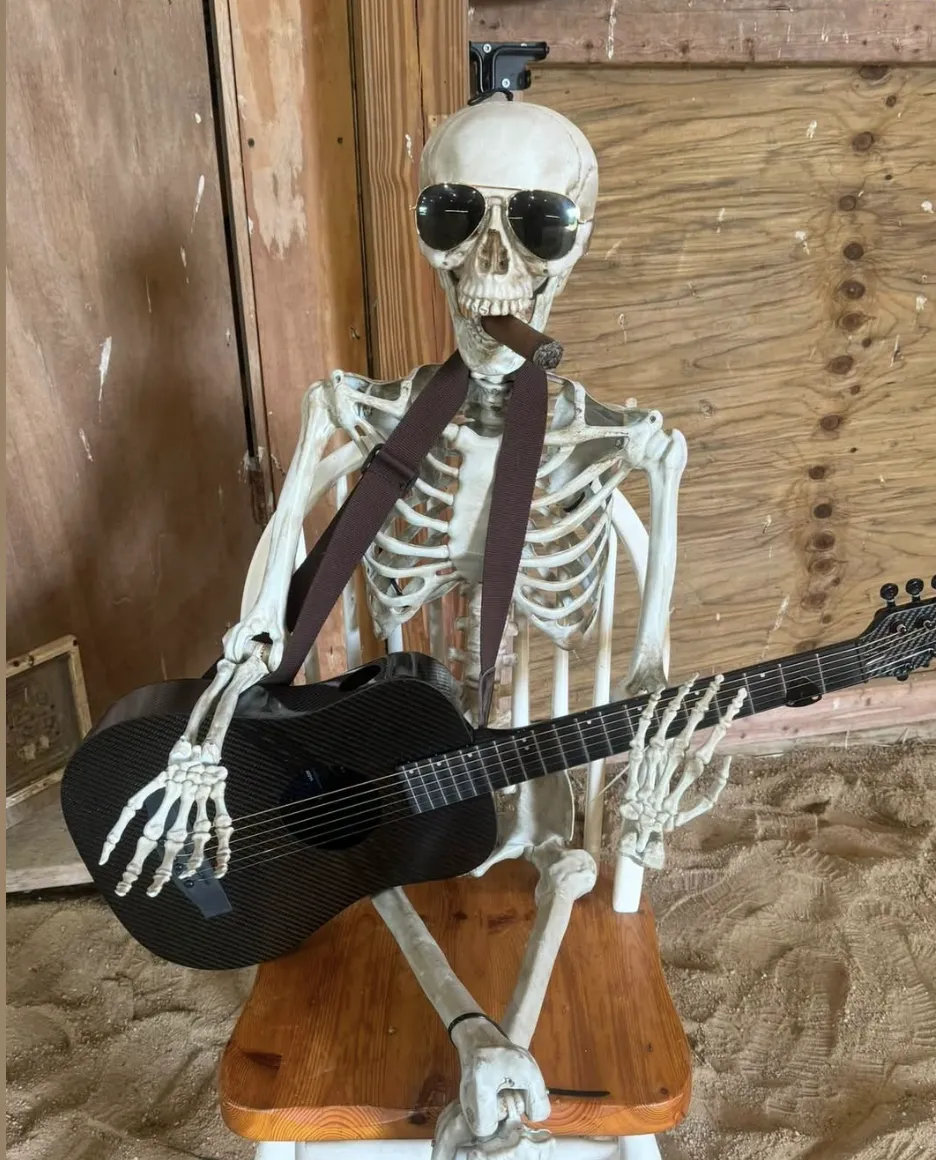
I had understood this in horsemanship for years, but it wasn’t until I tried learning guitar that it really clicked.
The people teaching me were talented musicians. They could play beautifully. Naturally, they wanted to get me playing songs as quickly as possible. The problem was that I didn’t even know how to hold the guitar properly. I didn’t understand chords, strumming, or the basic structure of music. I wasn’t ready for songs—I needed the foundations first.
It also made me realize something interesting. I know many people who can play several songs on the guitar, but don’t really understand music theory or how the instrument actually works. They’ve memorized pieces, but they don’t yet have the underlying language that allows them to build, adapt, and solve problems on their own.
Horsemanship is often the same.
It’s easy to collect exercises. You can learn shoulder-in, half pass, flying changes, liberty tricks, or groundwork patterns. But if the foundations underneath aren’t solid, those exercises become isolated pieces instead of parts of a complete system.
Lateral work is wonderful. Collection is wonderful. Advanced movements are wonderful.
But if you can’t coordinate your aids, carry your whip with tact, organize your body, maintain rhythm, or understand why an exercise exists, then you’re often just learning individual “songs” without understanding the music behind them.
Those foundational skills don’t always look exciting.
Sometimes progress is simply learning to walk with more balance.
Sometimes it’s coordinating your hands independently.
Sometimes it’s learning to breathe, to organize your posture, or to develop better timing.
Those skills may not earn applause, but they make everything that comes afterward easier.
That’s the philosophy behind everything I create—whether it’s a course, the video library, an article, a mentorship lesson, or a simple educational post.
My goal isn’t just to teach exercises. It’s to build the skill sets that allow those exercises to make sense.
That’s also why you’ll see so much content devoted to subjects that might seem ordinary at first glance: holding the whip, improving body awareness, developing rhythm, understanding timing, learning to observe your horse, or organizing your own movement. Those are the scales and chord progressions of horsemanship. They aren’t glamorous, but they create riders who can continue learning long after the lesson ends.
As teachers, it’s easy to feel pressure to always present the exciting things—the advanced movements, the glamorous looking horses (and let’s be honest, the gear!!) the impressive results.
Real education is usually much quieter than that.
It’s built through thousands of small improvements that eventually become invisible because they feel natural.
That’s why I’ll continue sharing realistic photos of horses learning, celebrating the basics, and encouraging people to spend time building the foundations.
Because education isn’t about collecting more exercises.
It’s about developing the understanding and abilities that allow every exercise to have meaning.
Sometimes that means practicing scales long before playing the concert.
That’s exactly how lasting horsemanship is built

GIVE YOU AND YOUR HORSE A PATH FOR DEVELOPING QUALITY HORSEMANSHIP.
© 2024 Amy Skinner Horsemanship. All Rights Reserved.