RIDING IN RHYTHM, PART TWO
Build strength that doesn't cost your horse their softness, or your connection with them.
Now enrolling: Course Begins September 29
Prerequisite: Riding in Rhythm 1 & 1.5
The familiar frustration
Does any of this sound like you and your horse right now?
You've been told to use "inside leg to outside rein," but no one has ever explained what that actually means, or what it's supposed to feel like.
The moment you pick up the contact your horse pops their head up or braces instead of softening into it.
Bending feels like a wrestling match, and you're the one doing all the twisting.
You're not entirely sure you're using your leg correctly, so you second-guess almost every stride.
You've collected advice from so many different clinicians and now none of it fits together into a sequence you can actually follow.
Your horse feels tight, hollow-backed, and unfocused under saddle, tolerating the ride rather than enjoying it.
You're not missing discipline.
You're missing the sequence: the order these pieces actually happen in, and the feel that tells you when it's actually time to progress
a note from amy
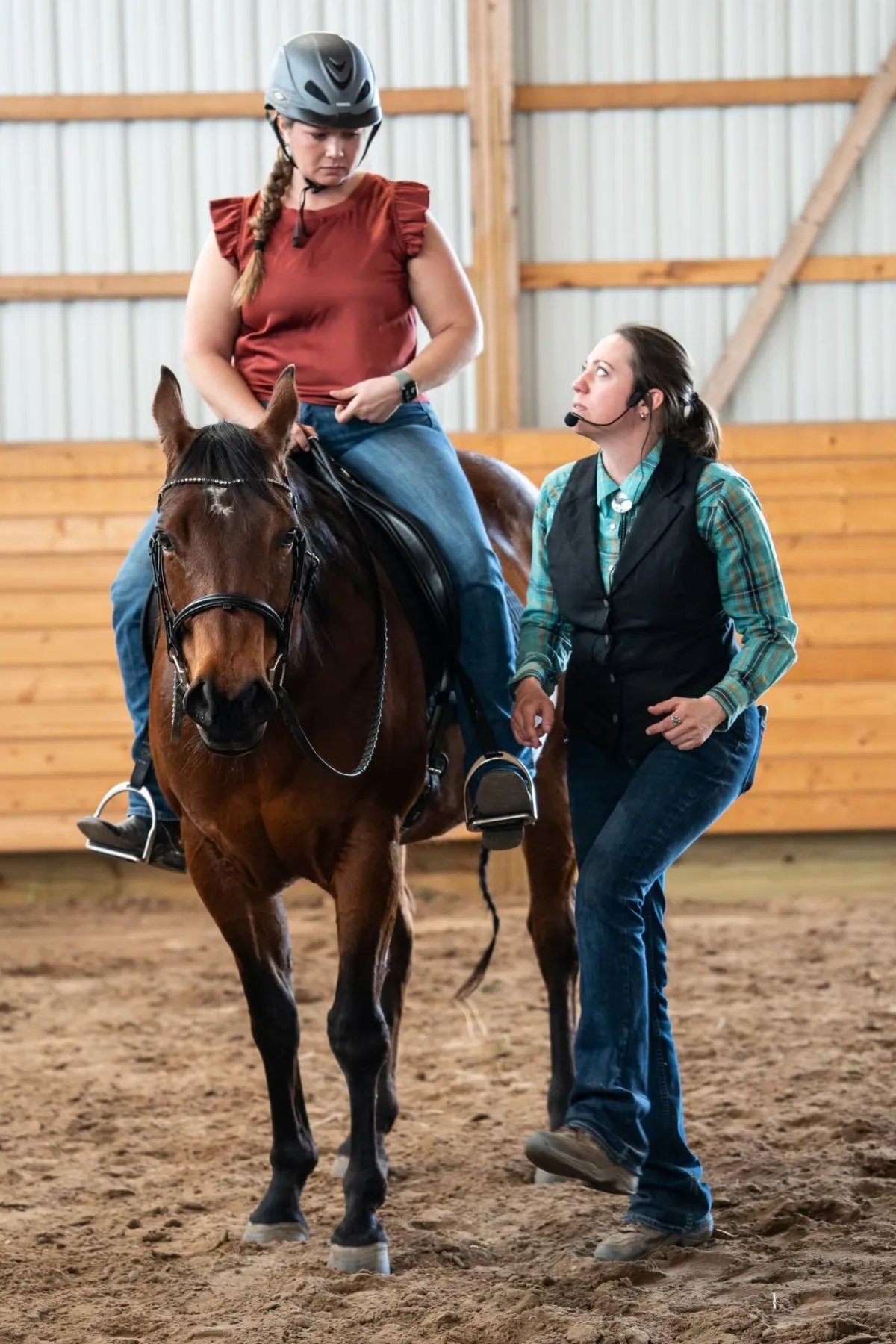
Dear Rider,
There's a version of "good basics" that just means quiet and compliant. That's not what we're after here.
Riding in Rhythm 2 picks up exactly where 1 and 1.5 left off, with new exercises built to help you fully understand the tools you already have. What contact is for. How real bend requires from your horse's spine, not just their neck. How your seat can do more of the talking, so your hands and legs can do less of the negotiating.
This is where "correct" stops being something you perform and starts being something you feel: a horse that swings through the back, meets your aids instead of bracing against them, and gets stronger without losing softness.
If you're ready to slow down long enough to both fully understand actually apply the work required, I'd love to have you in the course.
Amy
Introducing
Riding in Rhythm 2
This 6-week live course is for the rider who doesn't just want to think about how to improve their riding, but actually feel the changes. It builds on Riding in Rhythm 1 and 1.5, pairing real understanding with practical exercises to progress your horse as both an athlete and a partner as they are ready for it.
• Real clarity on contact
What it is, how to initiate it, and why it's a fluid, changing conversation, not a fixed position.
• Bend without the contortion
Understand what your horse's spine actually needs for real bend, so you're not twisting your own body to create it.
• A horse built evenly
Elastic strength on both sides: flexibility and strength developed together, not traded off.
• Feel alongside theory
Not a prescribed checklist, but an understanding you can apply to your own horse's unique situation.
What's inside: Section 1
The theory, finally explained
01
What is contact?
How to initiate it, what it should feel like from both ends, and a mindset that treats it as a living, changing conversation.
02
What is bend?
Spinal alignment and how it produces correct bend. We dispel the most common bend myths and get clear on the aids that create it.
03
The inside aids
How your inside leg and rein actually initiate bend, and what "inside leg to outside rein" really means, at last.
04
The outside aids
The half of the equation most riders overlook: establishing the track, getting the outside hind weight-bearing, and keeping your horse's spine aligned through a bend.
05
The seat's job in all this
How to make your seat the primary conductor of your aids, and use your leg and hand tactfully, in agreement with your seat's balance rather than instead of it.
06
The half-halt, demystified
Not a prescribed or memorized cue. A felt response to what's needed in the moment.
What's inside: Section 2
Theory in motion
01
Picking up the contact
Use your seat to move your horse into the hand, blending your two bodies into one circuit of energy, with the hand closing that circuit.
02
Riding both sides
A practical application of inside and outside aid theory, and your first steps toward preparing your horse for real bend.
03
Bending: corners and circles
Apply your bending aids and begin genuinely suppling your horse laterally, not just changing direction.
04
Walk-trot transitions
With lateral flexibility and better longitudinal connection established, ride a trot transition that preserves the purity of each gait.
05
Walk-halt transitions
Take the energy built in the upward transition and ride it into an uphill downward one, teaching your horse to rise into the bridle instead of falling onto the forehand.
Two bonus trainings, included
BONUS ONE
Flirting with Lateral Work
See how the bending aids you just learned set the tone for true lateral work, and get an early look at how it's taught.
BONUS TWO
Trot-Canter Transitions
Understand how your walk-trot transition work sets up the canter: bend, coordinated aids, and what it takes to get a pure, unrushed three-beat canter.
The result
What you and your horse walk away with
You
Real clarity on the theory behind your aids: not a one-size-fits-all recipe, but a feel you can apply to your own horse's unique situation.
Confidence using contact and bend, instead of guessing and second-guessing the whole ride.
A soft, focused horse that meets your aids instead of tolerating them.
Your horse
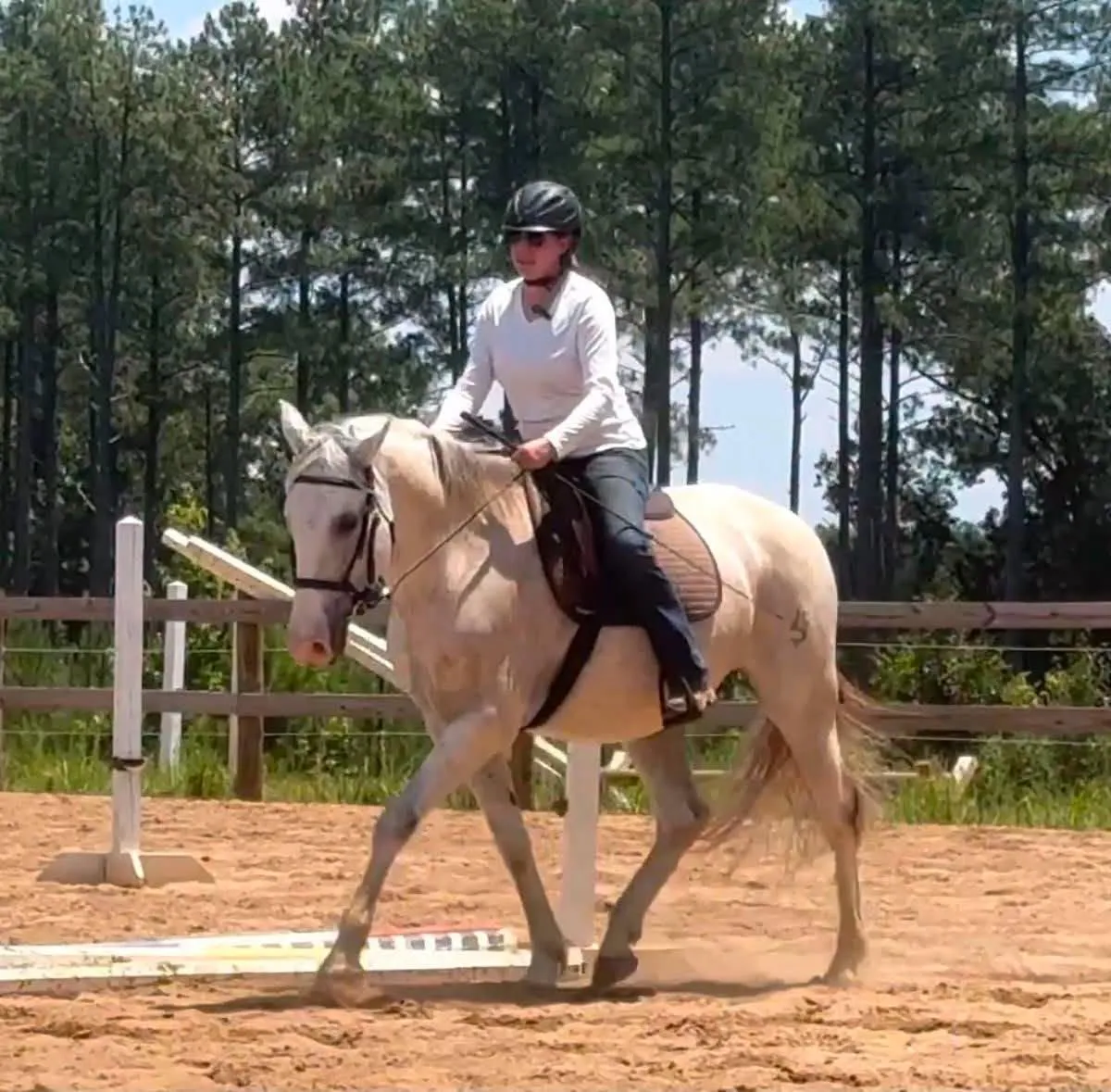
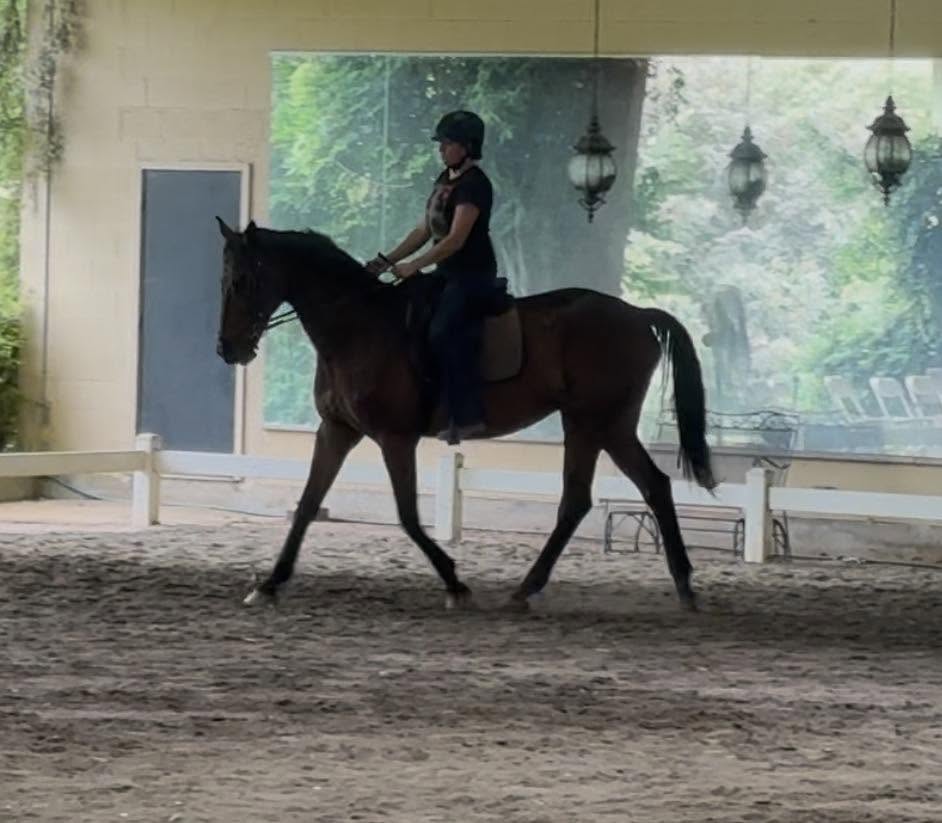
Swing through the back, and relief from the tension and pain that came with bracing against contact.
Better joint flexion, fitness, and elastic strength built evenly on both sides.
Focus and calm, genuinely enjoying your aids rather than just tolerating them.
Is this course right for you?
Riding in Rhythm 2 is built for riders who are ready to refine, not rush.
You've completed Riding in Rhythm 1 and 1.5
You'd rather refine your basics properly than jump ahead into work that your horse (or you) aren't ready for yet.
You want to understand the theory behind an exercise, not just follow steps.
You're ready to develop feel, and use it alongside theory instead of a memorized recipe.
Haven't taken Riding in Rhythm 1 or 1.5 yet? Start there first. This course builds directly on that foundation.
What students say
In their own words
"Amy's riding course was a game-changer for me. In the first week, her unique coaching style led me to make minor tweaks that led to big changes. I started to feel my horse. It's her direct and kind approach that made me brave enough to video myself and benefit from her critique."
KIMBERLY ALLEN
"Amy has an ability to see subtleties in a horse's posture and movement most people miss. What I found so valuable is that she teaches concepts in a way you can see and feel. It isn't mystical or lost too deep in philosophy, it's tangible and right in front of you."
ASHLEY JANTZER
"Working with Amy on the basics completely changed the way I interact with my horse daily. We are no longer rushing through simple tasks, and my horse is no longer avoiding our interactions. It's simple, but it isn't always easy. Amy teaches you how to make changes without judgment."
JESSICA BARILE
"I've had horses and been riding for over 40 years. Amy is the first teacher I've worked with who has helped me feel the movement of the horse in a way that feels like my horse and I are flowing together, instead of just being in the same place at the same time."
ELIZABETH ALEXANDER
join the course
Enroll in Riding in Rhythm 2
6 weeks. Live weekly Zoom calls. Personalized feedback on your videos. A community that's working through the same refinement you are.
best deal
ONE-TIME PAYMENT
$595
MOST FLEXIBLE
3 × $215
Everything included:
- Riding in Rhythm 2 course
- Exclusive members-only community
- Bonus: Flirting with Lateral Work
- 6 weeks of live weekly Zoom calls for guided support from Amy
- Personalized feedback from Amy on videos with your horse
- Bonus: Trot-Canter Transitions
7-day money-back guarantee
If within the first 7 days you find this course doesn't meet your expectations, contact us and we'll refund your money, no questions asked. Your satisfaction is paramount to us, and we're here to support you every step of the way.
© 2026 Amy Skinner Horsemanship. All Rights Reserved.